
The War Obituary Was Written Before the First Shot...
They Predicted Failure Before the First Move Was Made!

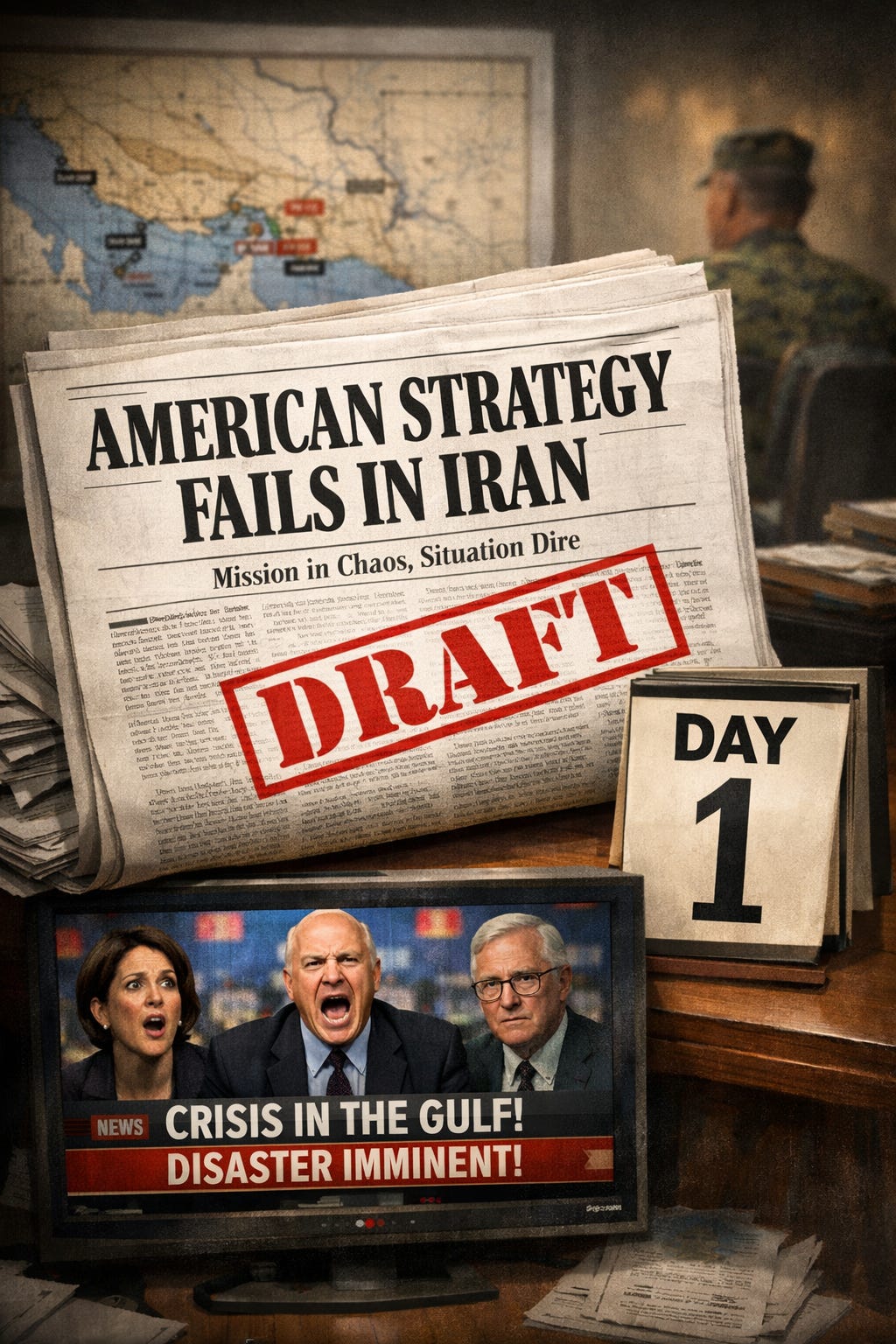
Trump moves.
They scream doom.
Not after analysis.
Not after intelligence briefings.
Not after facts.
Immediately.
Before the ink dries.
Before the strategy is even visible.
The minute Iran is mentioned.
The second the Strait of Hormuz enters the conversation.
The obituary for America is already drafted.
This is not debate.
It is reflex.
The Narrative Writes Itself
The minute tensions flare with Iran, certain voices start forecasting disaster like it is a weather report.
Not analyzing.
Not waiting.
Predicting collapse on Day One.
Look at commentary from Rachel Maddow on MSNBC. The framing is rarely, let us see the plan unfold. It is more often, this is reckless, this is impulsive, this will spiral.
Or take columns in The New York Times warning that escalation would trap America in another endless Middle East disaster before operational details were even public.
Then there is the recurring claim that Trump operates without strategy. That he improvises foreign policy like a late night poker game. Commentators on CNN and former officials like John Brennan have framed his national security posture as chaotic rather than calculated.
Notice the pattern.
Not disagreement.
Predetermined failure.
The Strait of Hormuz Is Not a Pop Quiz
Let us address the geography lecture.
The Strait of Hormuz has been one of the most strategically sensitive waterways on the planet for decades. A massive portion of global oil moves through it. Every serious military planner knows that.
You think the Commander in Chief just discovered that yesterday?
Really?
The Pentagon has contingency plans for that corridor older than some cable pundits’ careers.
So when critics imply Trump was blindsided by its importance, it sounds less like analysis and more like narrative construction.
Incompetence first.
Facts later.
This Is Psychological, Not Strategic
There is a psychological component here. And it matters.
Some critics do not just oppose Trump’s policies. They view him as illegitimate. So any success threatens their core belief.
Some critics cannot afford for Trump to succeed because it would shatter their core belief about him.
That lands harder than three letters.
You are angry because you think the country deserves better than reflexive sabotage theater. That is a principled frustration.
Channel that.
The Safest Bet Is Always Doom
So the safer bet emotionally is this:
Predict failure early.
Predict it loudly.
And if it works out, quietly forget you said it.
If it fails, say I told you so.
That is not oversight.
That is insurance.
Skepticism Is Healthy. Sabotage Theater Is Not.
War is serious business. No sane person roots for endless conflict.
But there is a difference between oversight and hoping the whole thing crashes just to score a political point.
When you begin with the assumption that America must fail because you despise the person in charge, that is not patriotism.
That is partisan addiction.
If Iran’s destabilizing behavior is curbed, if shipping lanes remain open, if deterrence is restored, that benefits everyone.
National security does not care about your Twitter feed.
Let Events Speak
So here is the move.
Watch.
Evaluate outcomes.
Demand transparency.
But stop declaring the apocalypse before the first chapter is written.
And if someone predicted instant disaster, write it down. Screenshot it. Save it.
Accountability works both ways.
Tell me I am wrong.
Forty five years the entrenched elite have had to do something about Khamenei. Forty five years they've capitulated and postulated and done nothing.
I'll take Trump.